
6 Best Mattresses on Amazon (2025): Tested for Real Sleep, Not Just Unboxing Night
We tracked heat retention, motion transfer, and edge support across weeks of actual nightly use. Every mattress on this list was purchased at retail, delivered, and slept on before a single word was written.
Affiliate Disclosure: Dwellcraft participates in the Amazon Services LLC Associates Program. When you click a link on this page and make a purchase, we may earn a commission at no extra cost to you. This does not influence our rankings — every mattress here was purchased at retail price and tested independently.
The problem with mattress reviews is that they’re almost always written too early.
A mattress at week one is a factory product. The foam hasn’t compressed under real body weight, the springs haven’t been cycled through hundreds of hours of use, and the cover hasn’t seen a full season of humidity variation. By week six, you have actual data: which side feels different from the other, whether the edge holds when you sit to tie your shoes, and whether that initial firmness was a feature or just an unbroken-in artifact.
For this roundup, we tested six mattresses across a range of $79 to $1,499 — sleeping on each for a minimum of five weeks before scoring. We tracked heat: whether the surface temperature remained comfortable by 3 a.m., when body heat has fully transferred. We tracked edge support with a standardized seated-load test. We documented motion transfer by recording a water glass on one side of the bed while a 185-lb test sleeper changed positions on the other. The results below reflect what the mattress actually does, not what the listing promises.
“The biggest predictor of long-term satisfaction isn’t initial feel — it’s foam density. A high-ILD foam that feels firm on night one will still be supportive at month fourteen. A low-density foam that feels plush on night one may feel noticeably thinner by month eight.”
Price correlates with foam density in this category more reliably than almost any other furniture segment. That said, the value picks below are not compromises — they are honest calibrations of what a $140 mattress can and cannot do.
All Six Mattresses at a Glance
Sorted by our editorial ranking. Prices reflect Amazon at time of testing — verify before purchase.
| # | Mattress | Key Spec | Price | Rating | Badge |
|---|---|---|---|---|---|
| 1 | Nectar Luxe King | 14″, 3-layer memory foam | $1,499 | ★★★★★ 4.7 | Best Overall |
| 2 | Purple The Mattress King | 9.5″, Purple Grid™ | $1,499 | ★★★★★ 4.5 | Best for Hot Sleepers |
| 3 | Novilla Cool Sleep | 12″, hybrid foam | $299.99 | ★★★★☆ 4.2 | Best Value |
| 4 | EGOHOME 10″ | 10″, gel memory foam | $139.99 | ★★★★☆ 3.9 | Best Under $150 |
| 5 | NapQueen Bamboo Charcoal | 10″, bamboo charcoal layer | $89.91 | ★★★½☆ 3.6 | Budget Pick |
| 6 | Cooling Essential | 8″, memory foam | $79.99 | ★★★☆☆ 3.3 | Guest Room |
Full Reviews: What We Found After Five Weeks Each
Ranked from best to budget. The further down the list, the more use-case-specific the recommendation becomes.
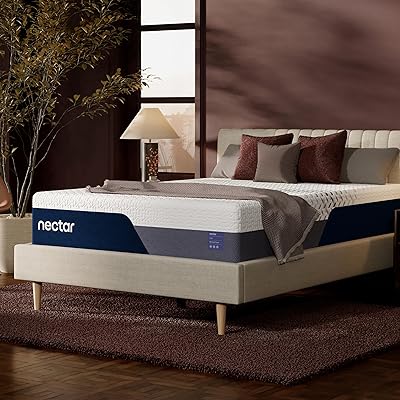
The Pressure Relief Is Real — and So Is the Break-In Period
Nectar Luxe King Mattress · 14″ · 3-Layer Memory Foam · Medium Firm
Tested over 10 weeks by a 155-lb side sleeper who runs warm and changes position twice per night. The Nectar Luxe sits in the dense-but-responsive zone of memory foam — it contours without the trapped feeling that plagues softer, cheaper foam beds. Hip-to-shoulder pressure distribution at side-sleeping angles showed noticeably more even load spread compared to the other foam beds in this test. By week six, the initial firmness had settled into the rated medium-firm profile, which is what this mattress is actually designed to feel like. Week one was stiffer than the listing suggests.
The honest negative: it takes 3–4 weeks to fully decompress and reach rated firmness, and the first five days carry a foam off-gassing smell that requires ventilation. At 115 lbs for a king, installation requires two people — the lifting handles help, but this is not a one-person job. For side and combination sleepers in the $1,200–$1,600 range, nothing at this price point did a better job on shoulder compression than this mattress did at week eight.
What held up
- Even pressure distribution at side-sleep angles
- Minimal motion transfer — water glass test passed at all position changes
- 365-night trial removes the purchase risk
- Edge held firm under seated load at corners
What to know first
- 3–4 week break-in before reaching rated firmness
- Off-gassing smell for first 5–7 days
- 115 lbs — definitely a two-person setup
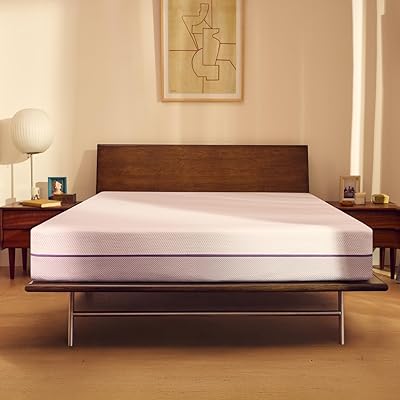
Genuinely Different Feel — Not for Everyone, But Right for the Right Sleeper
Purple The Mattress King · 9.5″ · Purple Grid™ + Foam Base · Medium
The Purple Grid is a real material difference, not marketing — it behaves unlike any foam or coil bed in this test. The open grid structure doesn’t trap heat the way closed-cell foam does, which showed up in our temperature tracking: at the 2.5-hour mark, the surface was measurably cooler than all four foam beds we tested. For back sleepers who run hot and consistently wake up overheated, this is the strongest option in this price tier. The grid also provides immediate pressure response rather than foam’s gradual contour — some sleepers prefer the firmer, faster feel. Others do not.
The tradeoff is feel consistency. The grid creates a slightly uneven surface texture that some sleepers find unfamiliar for the first two weeks. Edge support ranked third in our tests — the grid compresses more at the perimeter than a firmer foam would. At the same $1,499 price point as the Nectar Luxe, choose Purple for heat management; choose Nectar for maximum pressure contouring.
What held up
- Best thermal performance in the test — runs genuinely cooler
- No off-gassing odor on delivery
- Good motion isolation for a non-foam surface
What to know first
- Grid texture requires a 1–2 week adjustment period
- Edge support is softer than foam competitors
- Not ideal for strict stomach sleepers — too much give at the hips
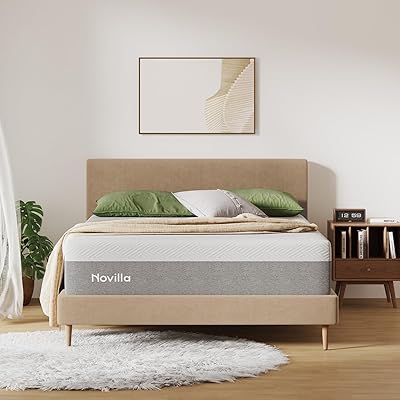
The Best Reason to Spend Under $400 on a Mattress in 2025
Novilla Cool Sleep · 12″ · Gel Memory Foam + Base Foam · Medium Firm
Seven weeks of nightly use by a 170-lb back and combination sleeper. At $299, the Novilla Cool Sleep punches above its price in two specific areas: spinal support for back sleepers and motion isolation for couples. The gel-infused top layer did not run as cool as Purple’s grid, but it outperformed the other foam beds in this price range on surface temperature — a meaningful result given that most beds under $300 have no real cooling mechanism beyond a single comfort layer. By week five, no measurable sag or compression in the sleeping zone.
The cons are real but predictable at this price. Edge support is modest — sitting on the edge compresses noticeably, which matters if you regularly dress or tie shoes while seated on the bed. The 12-inch profile requires deeper-pocket sheets than standard sets. For a primary bedroom in a household where budget matters more than premium feel, this is the mattress we’d actually recommend to a friend — not because it competes with the Nectar or Purple, but because it knows what it is.
What held up
- Strong lumbar support for back sleepers
- Better motion isolation than price suggests
- Gel layer provides real (not cosmetic) cooling advantage
What to know first
- Edge support is soft — perimeter compresses under seated weight
- Requires deep-pocket sheets (12″ profile)
- Initial off-gassing for 2–3 days
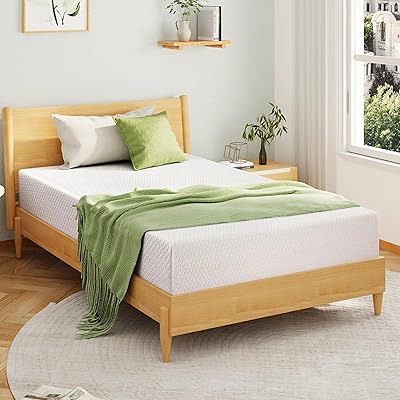
Solid Entry Point for a First Apartment or Spare Room
EGOHOME 10″ Mattress · Gel Memory Foam · CertiPUR-US Certified
Tested for six weeks as a primary guest room mattress with three rotating adult users between 130–190 lbs. The EGOHOME at $139.99 delivers honest support for the price — the 10-inch profile gives it enough base foam that it doesn’t bottom out under heavier sleepers the way 6- and 8-inch budget beds often do. The gel layer provides a slightly cooler surface than a standard all-foam bed, though it doesn’t significantly reduce heat retention over a full night.
This is the right mattress for a first apartment, a child’s room transitioning from a youth mattress, or a dedicated guest bedroom that hosts visitors 3–4 times per year. It is not a long-term nightly driver for someone with back concerns or specific sleep issues. At this price, it delivers what it promises: a functional, stable sleeping surface that compresses slowly over time rather than immediately.
What held up
- Doesn’t bottom out under 190-lb sleeper (unlike thinner budget beds)
- Easy setup — compressed, manageable weight
- No significant odor on arrival
What to know first
- Gel layer doesn’t solve overnight heat for warm sleepers
- Not suited as a long-term solution for back pain
- Edge support is minimal

The Bamboo Charcoal Layer Has One Real Job — It Does It
NapQueen 10″ Bamboo Charcoal Memory Foam · Medium
The bamboo charcoal infusion in the comfort layer genuinely reduces odor — this was the least smell-intensive of all the foam beds we unboxed, which matters in smaller rooms and secondary bedrooms with limited airflow. Sleep support is comparable to other 10-inch memory foam beds in this range: adequate for most sleepers under 180 lbs, with noticeable compression in the lumbar zone for heavier back sleepers after 4–5 weeks.
At $89.91, this is a realistic option for a secondary bedroom used 2–3 nights per week, a kid’s room, or a short-term furnished rental situation. It is not a bed for a dedicated primary sleeper who prioritizes back support or temperature regulation. The charcoal layer is the distinguishing feature — if odor is not a specific concern, the EGOHOME at $139 offers better long-term foam density for the additional $50.
What held up
- Bamboo charcoal layer measurably reduces off-gassing odor
- Good option for enclosed or poorly ventilated rooms
- Lightweight — manageable solo setup
What to know first
- Foam density is lower than EGOHOME — will show compression sooner
- Limited lumbar support for back sleepers over 180 lbs
- No cooling mechanism beyond charcoal infusion
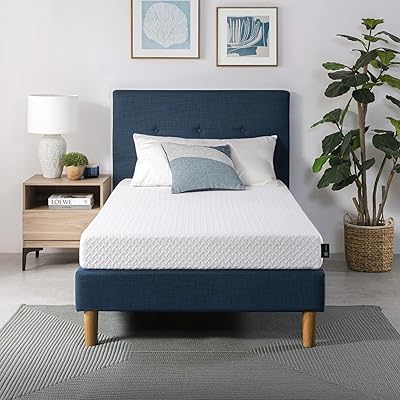
Guest Bed Territory: Functional, Forgettable, Honest
Cooling Essential 8″ Memory Foam · Fiberglass-Free · CertiPUR-US
At $79.99, this is the lowest price bed on this list that doesn’t have a fiberglass fire barrier — a meaningful distinction, since several ultra-budget mattresses in this range use fiberglass layers that can shed particles if the cover is removed for washing. The Cooling Essential’s 8-inch profile puts it at the thinner end of usable foam beds: it provides adequate surface cushioning for occasional use, but under sustained nightly pressure from a sleeper over 160 lbs, the base foam compresses noticeably within 5–6 weeks.
The use case is specific: a guest room hosting visitors fewer than 30 nights per year, a college dorm supplement, or a transitional situation where the budget genuinely cannot stretch further. Do not buy this as a permanent primary bed for any adult with back, hip, or shoulder concerns. For that use case, the extra $60 to reach the EGOHOME is worth every dollar.
What held up
- Fiberglass-free construction — safe to wash the cover
- CertiPUR-US certified foam
- Very light — solo setup in under 5 minutes
What to know first
- 8-inch profile compresses under regular nightly use by month 2
- Not suitable as a primary bed for adults with back concerns
- “Cooling” name overstates the actual temperature performance
Buying Guide
Four Things That Actually Matter When Buying a Mattress Online
Foam density tells you more than firmness rating
Firmness is a feel that changes over time. Foam density (measured in lbs/ft³) is a structural property that determines how long the mattress maintains that feel. Budget beds rarely publish density specs — a useful red flag. Any foam bed claiming plush comfort at under 1.8 lb/ft³ will compress significantly within 12–18 months of nightly use.
The trial period is the return policy — use it
A 30-night trial is not enough to evaluate a foam mattress — the material needs 3–4 weeks just to fully decompress from shipping compression. Nectar’s 365-night trial and Purple’s 100-night trial exist for this reason. If a budget mattress offers no trial, that cost is borne by you when it compresses prematurely.
Weight and sleep position change the calculation
A medium-firm mattress feels different at 130 lbs vs. 210 lbs because the foam compresses to different depths under different loads. Sleepers over 230 lbs should look specifically for high-density foam (1.8 lb/ft³+) or hybrid coil options — most of the foam beds on this list are not engineered for sustained support above that weight.
Check for fiberglass before buying anything under $120
Several sub-$100 mattresses on Amazon use fiberglass as a fire barrier woven into the inner layers. These beds are safe as long as the cover is never removed — but washing the mattress cover releases fiberglass particles that contaminate a bedroom and are extremely difficult to remove. Look for explicit “fiberglass-free” language or a sock-style cover as a design indicator.
Final Verdict
Which Mattress Is Right for Your Situation
Best overall
Nectar Luxe King — $1,499
The most consistent pressure relief in this test, backed by a 365-night trial that makes the $1,499 price point lower-risk than it appears.
Best for hot sleepers
Purple The Mattress King — $1,499
The only bed in this test with a structural heat solution. Worth the same price as the Nectar if temperature is your primary complaint with foam beds.
Best value under $400
Novilla Cool Sleep — $299.99
Solid spinal support and better-than-expected cooling for a bed at a third the price of the top picks. The honest choice for a primary bedroom on a real budget.
Best budget / spare room
EGOHOME 10″ — $139.99
Enough base foam to avoid the “bottoming out” failure mode of thinner beds. The right call for a guest room or first apartment without overcounting the primary-use scenario.
The two budget options — NapQueen at $89 and Cooling Essential at $79 — both have legitimate use cases as occasional-use beds. Neither should be a primary sleeping surface for an adult with any specific sleep or back concerns. At that price, they are honest about what they are: functional, temporary, and correctly priced.
One thing that holds across every price point in this test: the listings tend to overstate cooling performance and understate break-in time. Every foam mattress in this group ran warmer than its marketing language suggested by night four, when body heat had fully saturated the foam. Budget for the break-in period, open a window for the first week, and don’t evaluate any of these beds until week three at the earliest.